As of July 2026, Bill Nye the Science Guy Season 3 aired in 1995 with 20 episodes. Full episode guide and where to watch below.
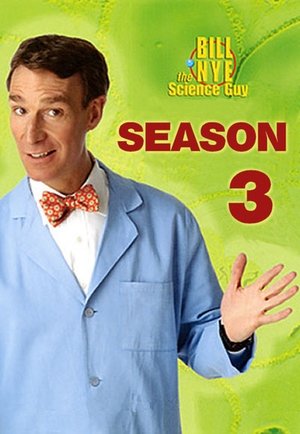
Bill Nye the Science Guy Season 3 poster
← Back to Bill Nye the Science Guy

Bill Nye the Science Guy Season 3

1995 20 Episodes Comedy · Documentary ⭐ 7/10

Bill Nye the Science Guy Season 3 has quietly become one of the more dependable comedies currently available. The show says what it needs to say in a single season, no filler. A 7/10 rating says what the writing already makes obvious: this one works. Bill Nye sets the tone, and the rest of the cast matches it scene for scene. Available now — press play and find out why people keep recommending it.

Bill Nye the Science Guy Season 3 is not trying to be everything to everyone, and that focus is exactly what makes it work. Sharp writing and a well-matched ensemble are what separate Bill Nye the Science Guy Season 3 from the crowd. Season 3 of Bill Nye the Science Guy includes 20 episodes. It aired from January 1995 to October 1995. This season stars Bill Nye. Bill Nye leads a cast that brings real weight to the material. It was aired in 1995. What keeps Bill Nye the Science Guy Season 3 from feeling disposable is a cast that clearly understands the material better than the format usually demands. There is real craft here, even in the moments that do not fully land.

Comedy fans looking for a reliably funny watch will find it in Bill Nye the Science Guy Season 3. It does not lean on comparisons to make its case. The complete run is available and best experienced without too much prior knowledge of where it goes. Bill Nye is funny in a way that holds up on rewatch. Put it on when you need something guaranteed to land.

📡 Where to Watch Bill Nye the Science Guy Season 3

Not currently available on major streaming platforms. Check back soon.

TV Butler Pro app
🎩 TV Butler Pro
You find it. Your history remembers it.

🎬 Bill Nye the Science Guy Season 3 — Episode Guide

E1
Planets & Moons
1995-01-14
Each planet is different. They are all different sizes – Pluto’s the smallest, and Jupiter’s the biggest. They come in a variety of colors – Mars is covered with rust, so it looks red; the methane (cold natural gas) in the atmosphere of Uranus makes it look blue; and Saturn’s colorful rings are made...
E2
Pressure
1995-01-21
When you push something, you’re using pressure. Pressure depends on two things – the power of the push and the area that’s being pushed on. A push on a small area makes more pressure than the same size push on a big area. Pushing hard on something creates more pressure than a little nudge, naturally...
E3
Plants
1995-01-28
A plant’s recipe for food has only three main ingredients: sunlight, carbon dioxide, and water. When plants make their food, they give off what animals need – oxygen. Without oxygen, animals like us wouldn’t be able to breathe. If plants weren’t here on Earth, we wouldn’t be here.
E4
Rocks & Soil
1995-02-03
We live on top of rocks – the Earth’s surface. There are three basic types of rocks — igneous, sedimentary, and metamorphic — and each type is made a different way. Igneous rocks are made from cooled lava. Sedimentary rocks are made from small pieces of other rocks stuck together. Metamorphic rocks ...
E5
Energy
1995-02-10
Energy can change forms. Your body changes the energy in food into energy you can use to do things. Dams turn the energy in falling water into electrical energy to bring power to your house. Sound energy changes into moving energy (like when the bass is so high you can feel the floor move).
E6
Evolution
1995-02-17
All living things have genes, which are like little sets of blueprints. Genes have information about the color of your eyes, the shape of your nose, and whether you hair is straight or curly. When living things make other living things, they pass copies of these blueprints to the offspring. The copi...
E7
Water Cycle
1995-03-24
About 70% of the Earth’s surface is covered in water, and almost all of that water has been around since the Earth formed billions and billions of years ago. That means a glass of water you drink today could be water that a dinosaur once sipped. Water is constantly recycled on Earth as rain, snow, s...
E8
Friction
1995-03-31
Friction is a force that slows moving things down and turns the moving energy into heat energy. When two things rub together, like your bike tires and the road, friction between them slows you down. There’s also friction in the metal parts of the wheel’s hub – at the center. There’s even friction be...
E9
Germs
1995-04-07
Don’t panic, but germs are all around you. Germs are bacteria, viruses, protozoa, and fungi, very small one-celled organisms. Your skin keeps most of these organisms from ever getting into your body. If germs slip inside, your body has some powerful weapons to attack and destroy them. And not all ge...
E10
Climates
1995-04-14
There are lots of different climates all over the world. Deserts are warm and dry. Temperate forests are cold and wet. Tropical rain forests are warm and wet. Animals and plants live in climates that are good places for them to live. Cacti wouldn’t grow too well in the Arctic, just like polar bears ...
E11
Waves
1995-04-21
Energy, things like light, heat, and sound, moves in waves. You’ve probably seen waves in the ocean, or ripples when you throw a rock in a pond. Moving energy is not like the wave you do with your hand.
E12
Ocean Life
1995-04-28
There’s an amazing amount of living things in the ocean. There are fish, sharks, flowers, whales, squid, sea plants, sea anemones, sea otters, and all sorts of other things living in the water. But most of the living things in the ocean are so small we can’t even see them. These tiny plants and anim...
E13
Mammals
1995-09-08
Mammals - They're (sometimes) big, they're hairy, and they're warm-blooded. From human being to moose and from cats to rats, Bill Nye explains what it takes to be in the mammal family.
E14
Spinning Things
1995-09-15
A lot of things spin – bike wheels, footballs, hard disks in your computer, and even the Earth – they’re all twirling around. Spinning things have inertia, which means they keep spinning unless something slows them down. Bike tires keep spinning until you put on the brakes. A football spirals throug...
E15
Fish
1995-09-22
More than 22,000 different species of fish live in the oceans, lakes, and rivers of the world. Fish come in all shapes and sizes. Some eat water plants, some eat other fish. Lampreys and some jawless fish suck onto other fish for food. Stone fish live on ocean bottoms and camouflage themselves as ro...
E16
Human Transportation
1995-09-29
Transportation is all about moving people and their things. You can transport yourself around using your feet, a bike, a car, a train – anything that gets you going from one place to another. Humans have been moving around from place to place ever since they’ve been on Earth. That’s how we get our f...
E17
Wetlands
1995-10-06
Wetlands are not just home to different animals and plants, but they also control flooding and help keep the Earth’s water clean. Flood waters move more slowly through wetlands because they have to go through barriers of plants and dirt. Wetlands help stop erosion because the plants stop the soil fr...
E18
Birds
1995-10-13
Scientists believe that birds evolved from reptiles. Birds have backbones, and they lay eggs, but they’ve developed a unique feature that sets them apart from all other animals – feathers. Feathers are made of the same stuff human fingernails and hair are made from – a protein called keratin. Feathe...
E19
Populations
1995-10-20
Populations need a couple of basic things to survive – food and a place to live. When two or more populations of living things are crowded into a small area, there is competition for food and space. A population of birds and a population of squirrels compete for seed and bread crumbs in a park. Comp...
E20
Animal Locomotion
1995-10-27
Some animals have wings that let them fly and hover. Other animals have legs, from two to more than 200, to get them walking, galloping, or running. Some animals’ legs are really pumped-up for powerful jumps. Animals also strut, stroll, slither, swim, slime, sprint and squeeze their way around.

🎭 Cast of Bill Nye the Science Guy Season 3

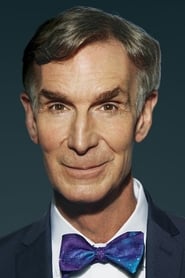
Bill Nye
Bill Nye
Self - Host

📋 All Seasons of Bill Nye the Science Guy

Season 1Season 2Season 4Season 5

Never Lose Track of Bill Nye the Science Guy

TV Butler Pro lets you search every streaming service in seconds, tracks what you've watched, and works completely free. No app download needed.

🎩 Try TV Butler Pro Free