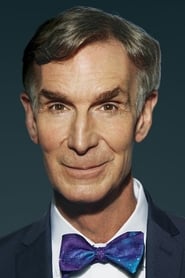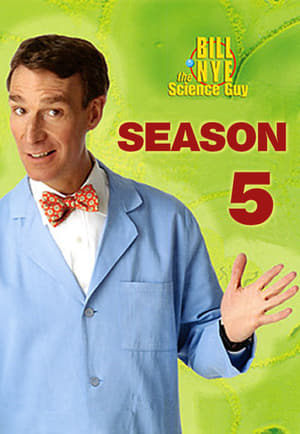
As of July 2026, Bill Nye the Science Guy Season 5 aired in 1997 with 20 episodes. Full episode guide and where to watch below.
Bill Nye the Science Guy Season 5 poster
← Back to Bill Nye the Science Guy

Bill Nye the Science Guy Season 5

1997 20 Episodes Comedy · Documentary ⭐ 7/10

Bill Nye the Science Guy Season 5 is currently streaming on major platforms, and it delivers exactly the kind of comedy that earns a loyal following. A compact run that never overstays its welcome. With 94 viewer ratings on TMDB, this is not a title flying under the radar. Watch it for Bill Nye — stay for everyone else around them. Put it on tonight and see for yourself.

There is a reason Bill Nye the Science Guy Season 5 keeps coming up in conversation. Bill Nye the Science Guy Season 5 does what great comedies rarely manage — it is actually funny, consistently, across the whole run. Season 5 of Bill Nye the Science Guy includes 20 episodes. It aired from September 1997 to June 1998. This season stars Bill Nye, Rachel Glenn and Jennifer Lin. Bill Nye and Rachel Glenn lead a cast that brings real weight to the material. It was aired in 1997. The timing in Bill Nye the Science Guy Season 5 is precise enough that even the throwaway lines land on a second watch. There is real craft here, even in the moments that do not fully land.

Bill Nye the Science Guy Season 5 is the kind of thing you put on in the background and end up fully watching. If you have run out of similar titles to watch, this is a strong next pick. Short enough to finish in a weekend, substantial enough to feel satisfying. Bill Nye's comic timing carries it through its weaker moments. The kind of comedy you recommend to someone who claims they do not watch much.

📡 Where to Watch Bill Nye the Science Guy Season 5

Not currently available on major streaming platforms. Check back soon.

TV Butler Pro app
🎩 TV Butler Pro
You find it. Your history remembers it.

🎬 Bill Nye the Science Guy Season 5 — Episode Guide

E1
Forensics
1997-09-19
Forensic scientists try to find out the who, what, when, where, and why of events in the past – crimes. Most forensic scientists work in police labs. They collect evidence from the scene of a crime and analyze the evidence in a lab. Forensic scientists look for clues that will help them solve a crim...
E2
Space Exploration
1997-09-26
Space is hard to explore, because it’s really, really big. Most things in space are so far away that people we build special equipment just to see them. We use telescopes to magnify far-away solar systems, planets, and stars. Rockets send astronauts past the Earth’s atmosphere. Space probes with spe...
E3
Genes
1997-10-17
The color of your eyes, the shape of your nose, and the straightness (or curliness) of your hair depend on your genes. Not jeans the pants, but genes, the long strands of chemicals in your cells. Genes are like a blueprint for your body, and your cells follow the blueprint to build you. All living t...
E4
Architecture
1997-10-24
Towers, teepees, castles, and condominiums – some kind of planning goes into all buildings, no matter how big or small. Architects are people who design buildings, and the areas around buildings. Usually architects draw on a computer or a big desk (a drawing board). The plans show the dimensions of ...
E5
Farming
1997-10-31
Before food gets into your kitchen, before it even gets to the store, it’s on a farm. Almost everything we eat is grown on a farm, an area of land used to raise animals and plants. Farming nowadays can get pretty complicated. Farmers are scientists – agricultural scientists. Farmers work hard to kee...
E6
Life Cycles
1997-11-14
My, how you’ve grown! The popular exclamation from your Auntie may be no great revelation, but growing bigger is a part of life. In fact, it’s part of the whole cycle, or pattern, of human life that began with your birth. The different stages in life are called life cycles. Humans aren’t the only on...
E7
Do-It-Yourself Science
1997-11-21
Do-it-yourself science involves a question, observations, a hypothesis, and experimentation. You have probably come up with questions after you noticed something unusual. For instance, why do fingers get all pruny and wrinkled when I sit in the tub? The observation – shriveled fingertips – is the fi...
E8
Atoms & Molecules
1997-11-28
Atoms are reeeeally small. They are so small that you can’t see them with just your eye. It takes as many as 10 million of them side-by-side to measure a single millimeter. In fact, atoms are the smallest pieces of “stuff” that are still considered “stuff.” If you take something and break it into ti...
E9
Ocean Exploration
1997-12-05
Ocean exploration is a tricky, risky business since humans can’t naturally survive under the ocean. Ocean explorers are constantly inventing new tools to help them dive deep into the sea. Over the last few hundred years or so, and especially in the last few decades, we humans have come up with all k...
E10
Lakes & Ponds
1998-02-21
What do you get when you have a big hole in the ground and some water? Lakes and ponds. All lakes and ponds have one thing in common – they happen when a basin, or hole, forms, and then fills with water. A glacier may grind a long gulch, volcanoes and earthquakes may make a sinkhole, or engineers ma...
E11
Smell
1998-02-28
How do noses work? Objects give off tiny amounts of tiny molecules into the air. When just a few of these molecules get up your nose, they dissolve in the mucus up there. Some molecules come into contact with special receptors on what’s called your “olfactory membranes.” Each nostril has a membrane,...
E12
Caves
1998-04-25
Caves come in all different shapes and sizes depending on how they were formed. Spelunkers (people who explore caves) have plenty of descriptive names for caves and the natural rocky features that form within them – soda straws, fried eggs, popcorn and draperies are just a few. Caves can be as simpl...
E13
Fluids
1998-05-02
Fluids are cool; they ooze and swoosh. Whatever container you put a fluid in, that fluid will take the same shape. Milk poured into a pitcher forms to the shape of the pitcher. If you pour it into a glass, it takes the shape of the glass. You just can’t do that with a boulder. But with the right con...
E14
Erosion
1998-05-09
Dirt, sand, and rock from the Earth’s surface gets blown, sliced, torn, swallowed and distributed all over the world. What was yesterday’s hill is tomorrow’s flat plain. The planet looks a lot different than it did when it formed four and a half billion years ago. The force of erosion, the slow wear...
E15
Comets & Meteors
1998-05-16
Outer space is full of stuff. We’re not just talking about planets and moons. There are some bits and pieces, too small to be noticed most of the time that float around and occasionally run into all those planets and moons. Comets and meteors are the big bits of dirt, rock and ice that inhabit our U...
E16
Storms
1998-05-23
Storms are big, loud, and often accompanied by rain, snow, sleet, or hail. Where do these wild, dangerous, and necessary tornadoes, hurricanes, and thunderstorms come from? Storms happen when huge different air masses collide. Along the border of these air masses, water vapor condenses into clouds, ...
E17
Measurement
1998-05-30
Did you know that the Concorde moves 300,000 times faster than a land snail? Or that a giant redwood can be as tall as a 35-story apartment building? The only reason we can make these comparisons is because people have measured these things. We don’t compare jets and snails every day, but we do rely...
E18
Patterns
1998-06-06
Every time you look at something, hear something, touch something, smell something, or taste something, your brain collects a little information about the world around you. You may even have a scrapbook to store memories of some of that information. There’s a lot out there though. How do people sort...
E19
Science of Music
1998-06-13
Music is the art and science of expressing ideas and feelings through sound. A sad song can say more about how someone feels than most words, and a familiar song can make crowds clap together and feel like one happy family. Whatever the emotion, music seems to have a way to communicate it. The music...
E20
Motion
1998-06-20
Things can appear to be moving, when they really aren’t. Sometimes an object might seem to be at rest, even when it is in motion. It’s all relative. Relative motion, that is. How things appear to move depends on how you, or any observer, happens to be moving. So, if you’re on a bus looking out a win...

🎭 Cast of Bill Nye the Science Guy Season 5

Bill Nye
Bill Nye
Self - Host
RG
Rachel Glenn
Nancy
JL
Jennifer Lin
AB
Amy Broder
Amy
EF
Ethan Ferkiss
Smell Gibson

📋 All Seasons of Bill Nye the Science Guy

Season 1Season 2Season 3Season 4

Never Lose Track of Bill Nye the Science Guy

TV Butler Pro lets you search every streaming service in seconds, tracks what you've watched, and works completely free. No app download needed.

🎩 Try TV Butler Pro Free