As of July 2026, The Sky at Night Season 12 aired in 1968 with 14 episodes. Full episode guide and where to watch below.
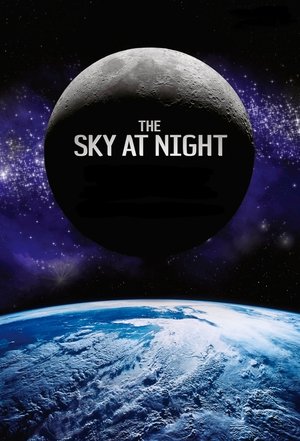
The Sky at Night Season 12 poster
← Back to The Sky at Night

The Sky at Night Season 12

1968 14 Episodes Documentary · News ⭐ 8/10

If you want a documentary that respects its subject, The Sky at Night Season 12 is available on streaming right now. Across 1 season, the show has had time to find its rhythm and keep it. With 14 viewer ratings on TMDB, this is not a title flying under the radar. Rigorous in a way documentary storytelling does not always commit to. Start it whenever you need something guaranteed to land.

The Sky at Night Season 12 is not trying to be everything to everyone, and that focus is exactly what makes it work. What makes The Sky at Night Season 12 work is a willingness to sit with complexity instead of resolving it neatly. Season 12 of The Sky at Night includes 14 episodes. It aired from January 1968 to December 1968. Episodes include "Home-Built Observatories", "Calendars of Other Worlds", "The New Planetarium". It was aired in 1968. What elevates The Sky at Night Season 12 above most documentary work is a refusal to settle for the easy version of the story. The hit rate here is high enough that skipping ahead never feels like an option.

Anyone after documentary work that genuinely informs rather than confirms will value The Sky at Night Season 12. It stands on its own even without an obvious comparison point. Short enough to finish in a weekend, substantial enough to feel satisfying. The subject drives every choice here, not the other way around. The kind of production you finish and immediately want to read more about.

📡 Where to Watch The Sky at Night Season 12

Not currently available on major streaming platforms. Check back soon.

TV Butler Pro app
🎩 TV Butler Pro
You find it. Your history remembers it.

🎬 The Sky at Night Season 12 — Episode Guide

E1
Home-Built Observatories
1968-01-05
The enthusiasm of astronomers makes them build observatories at their own homes. Tonight Patrick Moore looks at three home-built observatories, including his own, which he has successfully transferred to Northern Ireland. Not all are built for the same purposes.
E2
Calendars of Other Worlds
1968-02-02
Leap Year makes this a special month-but variations in earthly calendars are slight compared with those in other worlds. In tonight's programme, Patrick Moore talks about Uranus's 65,000-day year, Jupiter's 'year', twelve times as long as ours but with a 'day' of less than ten hours, and Venus's 'y...
E3
The New Planetarium
1968-03-01
The Armagh Planetarium-the first big public planetarium to be built in Britain outside the London area-was opened to visitors on February 5. Its Director, Patrick Moore, shows viewers round and describes its principles and uses.
E4
Black Clouds in the Galaxy
1968-03-29
Patrick Moore discusses with Iain Nicolson the sooty clouds in space which hide some stars and themselves shine in the light from others.
E5
Flights of Space Fancy
1968-04-26
Patrick Moore discusses with Michael Bentine the problems of manned flight beyond the Moon to the planets and stars. They examine the techniques devised in fiction and in fact to solve some of these problems.
E6
A Close Pass by Icarus
1968-05-24
In three weeks' time the asteroid Icarus, first seen in 1949, orbits close to the Earth. Patrick Moore talks to Dr. Vinicio Barocas about the nature and movements of the asteroids.
E7
The Unquiet Sun
1968-06-21
Sunspots, or 'storms' on the sun's surface, appear in maximum numbers about every eleven years; and large numbers are expected this year. Patrick Moore discusses with William Baxter the significance of sunspot activity.
E8
Pulsars
1968-07-19
Strange, quickly vibrating radio sources have been discovered far out in space. These pulsating stars or 'pulsars' are one of the most exciting discoveries of modern science, and have taken astronomers by surprise. Patrick Moore talks about them with Dr. A. Hewish at Cambridge and discusses the imp...
E9
The Structure of the Moon
1968-08-16
Within a few months from now, man may land on the moon. Patrick Moore discusses with a geologist, Dr. Peter Cattermole, the conditions the first lunar astronauts are likely to find.
E10
The Siberian Eclipse of the Sun
1968-09-09
On September 22 a total eclipse of the sun will be visible in Russia. Patrick Moore explains why eclipses are scientifically important and what people in Britain will see.
E11
The Eclipse of the Sun
1968-10-07
Patrick Moore shows film and gives a first-hand description of the recent total eclipse of the sun he saw in Siberia, and discusses its scientific significance with another British astronomer who was there, Dr. Ron Maddison.
E12
The 'Clocks' of Space
1968-11-04
Radio-astronomers at Jodrell Bank are carrying out a series of remarkable experiments to measure the distance from earth of 'pulsars'-the mysterious regularly-ticking radio sources out in space which were discovered last year by British scientists. Patrick Moore discusses the significance of these ...
E13
Venus, The Hot Planet
1968-12-02
The planet Venus is like the earth in size, yet totally unlike it - as recent American and Russian probes have shown - in being an inferno of heat and clouds. Patrick Moore explains why modern research into Venus has only made the planet more mysterious than ever: and discusses with Commander Henry...
E14
The Moon and the Earth
1968-12-30
Is it unlucky to see the new moon through glass? The moon has always been thought to have a powerful influence on the earth, causing not only tides but good luck, bad luck, and even lunacy, according to its phases. Patrick Moore discusses with Henry Brinton, Bert Foord, weather man and J. P. Hutchi...

📋 All Seasons of The Sky at Night

Season 1Season 2Season 3Season 4Season 5Season 6Season 7Season 8

Never Lose Track of The Sky at Night

TV Butler Pro lets you search every streaming service in seconds, tracks what you've watched, and works completely free. No app download needed.

🎩 Try TV Butler Pro Free