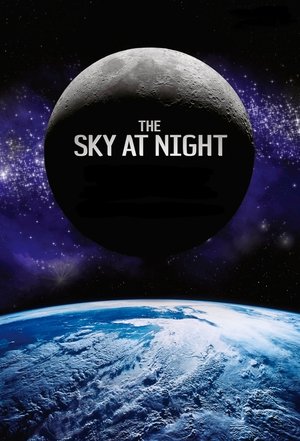
As of July 2026, The Sky at Night Season 4 aired in 1960 with 13 episodes. Full episode guide and where to watch below.
The Sky at Night Season 4 poster
← Back to The Sky at Night

The Sky at Night Season 4

1960 13 Episodes Documentary · News ⭐ 8/10

Right now you can watch The Sky at Night Season 4 on streaming — and it earns the access it was given. A compact run that never overstays its welcome. An 8/10 rating says what the writing already makes obvious: this one works. The access the production secured is remarkable, and it does justice to it. There is no real reason to keep putting it off.

The Sky at Night Season 4 is not trying to be everything to everyone, and that focus is exactly what makes it work. The Sky at Night Season 4 approaches its subject with the rigour that makes documentary storytelling worth taking seriously. Season 4 of The Sky at Night includes 13 episodes. It aired from January 1960 to December 1960. Episodes include "The Great Spiral", "Uranus", "Why Stars Twinkle". It was aired in 1960. What elevates The Sky at Night Season 4 above most documentary work is a refusal to settle for the easy version of the story. It rarely drops the ball, and when it does, it recovers fast.

For viewers who want their entertainment to leave them with something, The Sky at Night Season 4 delivers on both counts. If you have run out of similar titles to watch, this is a strong next pick. Short enough to finish in a weekend, substantial enough to feel satisfying. Getting this level of access rarely happens twice. The kind of documentary that makes you feel informed rather than manipulated.

📡 Where to Watch The Sky at Night Season 4

Not currently available on major streaming platforms. Check back soon.

TV Butler Pro app
🎩 TV Butler Pro
You find it. Your history remembers it.

🎬 The Sky at Night Season 4 — Episode Guide

E1
The Great Spiral
1960-01-20
Patrick Moore talks about the Andromeda nebula, the most distant object in the heavens it is possible to see with the naked eye, and compares it with what is known of our own galaxy.
E2
Uranus
1960-02-17
Patrick Moore talks about the remote and slow-moving planet which was discovered in 1781. Uranus is sixty-four times as large as the earth, and has 65,000 days in its year, which is eighty-four times as long as ours.
E3
Why Stars Twinkle
1960-03-16
Patrick Moore explains how the atmosphere interferes with the astronomer's work. He discusses with Dr. Hugh Butler of the Royal Observatory, Edinburgh, how a satellite could be an astronomical observatory.
E4
Visitor from Space
1960-04-11
The new comet, Burnham's, is now moving steadily closer to the earth, and should be clearly seen in late April. It will then be in the Northern part of the sky not far from the Pole Star. Patrick Moore talks about this and other comets-where they come from, what they are, and how they move.
E5
Star Clouds of Sagittarius
1960-06-08
Patrick Moore talks about the centre of our galaxy, which is so obscured by clouds of dust, gas, and interstellar haze that only radio waves come through with evidence of what lies beyond.
E6
Other Moons
1960-06-11
Patrick Moore talks about the moons of other planets in the solar system. Some planets have more than one moon and they range in size from tiny globes, twelve miles across, to giants twice as heavy as the Moon.
E7
Celestial Fireworks
1960-08-08
August is one of the best times of the year to observe shooting stars. Patrick Moore talks about meteors and meteorites, and what we know about these sudden arrivals from outside the Earth's atmosphere.
E8
Measuring the Universe
1960-08-30
Patrick Moore talks to Sir Harold Spencer Jones F.R.S. The former Astronomer Royal about measuring distances which are literally astronomical. The greatest distance ever measured is that of a recently discovered galaxy whose light takes five thousand million years to reach the earth.
E9
Moonscape
1960-09-27
Soon the Russians and Americans should be able to land instruments on the surface of the moon. Patrick Moore discusses with Gilbert Fielder, the Director of the Lunar Section of the British Astronomical Association, the conditions to be met with on the moon's surface and some of the problems that m...
E10
Make-up of the Stars
1960-10-10
Patrick Moore describes how the modern spectroscope has enabled astronomers to find out what different stars are made of and how bright they actually are.
E11
Astronomy in Russia
1960-11-07
Patrick Moore talks about his recent visit to Russia and some of the principal observatories there.
E12
Tektites
1960-12-05
These are strange glassy objects of unknown origin which are found on the surface of certain parts of the world. Patrick Moore discusses with Dr. M. H. Hey, of the Department of Mineralogy, British Museum (Natural History), the theory, which has recently been in the news, that Tektites may have orig...
E14
Episode 14

📋 All Seasons of The Sky at Night

Season 1Season 2Season 3Season 5Season 6Season 7Season 8Season 9

Never Lose Track of The Sky at Night

TV Butler Pro lets you search every streaming service in seconds, tracks what you've watched, and works completely free. No app download needed.

🎩 Try TV Butler Pro Free